
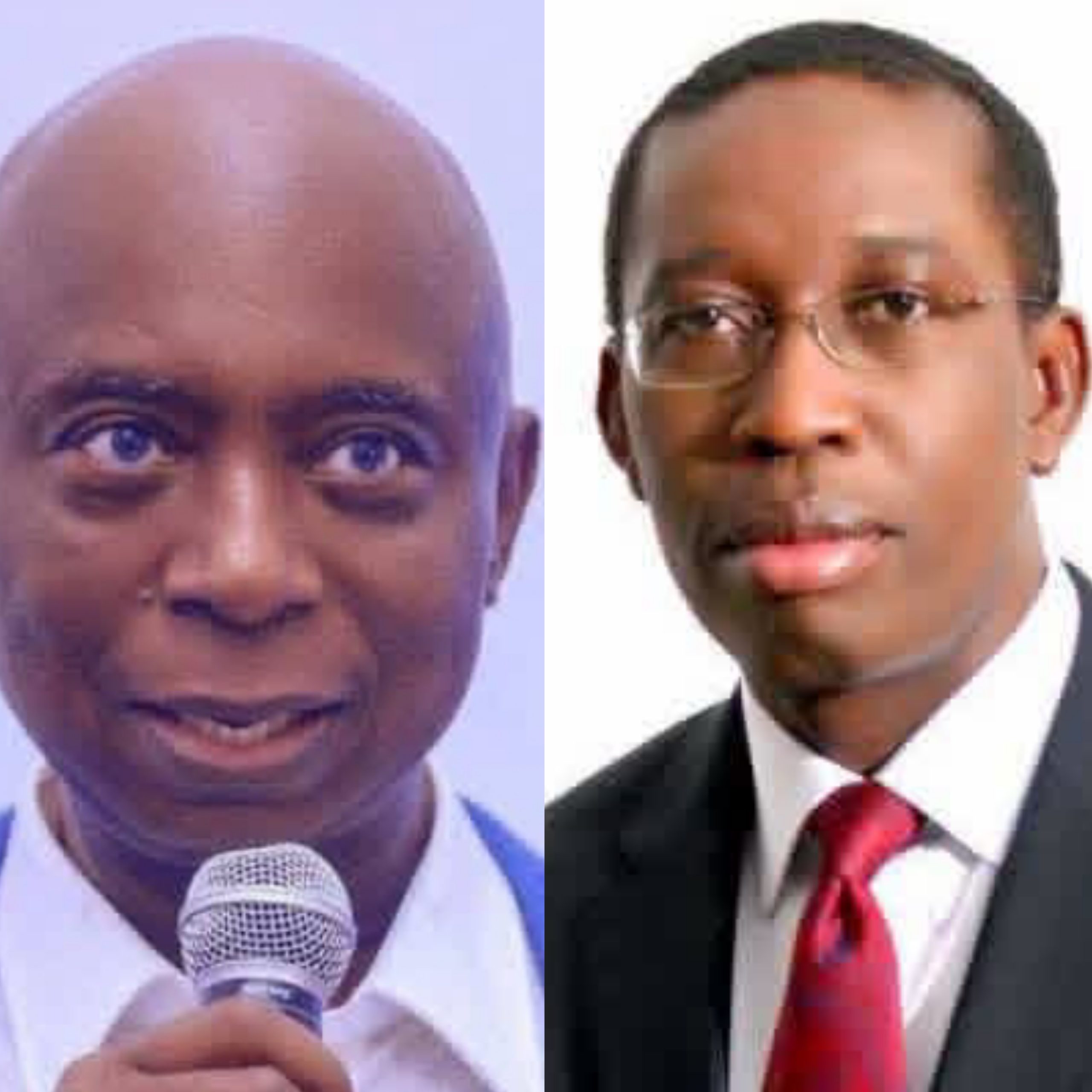

The legal battle over Delta North is no longer simply a contest between two politicians. It could reshape the APC’s strategy, Anioma politics and the balance of power in Delta State.
By: Peter Legacy/Eunice Bello/ Emeka Okenyebunor|NOL24 Political Desk
ASABA, DELTA STATE — What happens if Senator Ned Nwoko returns to the ballot?
And what happens if he goes a step further — reclaiming not merely the All Progressives Congress ticket for Delta North, but ultimately the Senate mandate itself?
Those questions have moved from the realm of political speculation into one of the most closely watched legal and political calculations surrounding the 2027 elections in Delta State.
Nwoko, the incumbent senator representing Delta North, lost the APC senatorial primary to former Delta State Governor, Senator Ifeanyi Okowa, in May 2026.
The official result announced by the APC gave Okowa 113,309 votes against Nwoko’s 2,612, with Maryam Ali recording 40 votes. The primary was conducted across the nine local government areas of Delta North.
Nwoko rejected that outcome.His camp alleged that the primary was manipulated and maintained that its own records and video evidence showed a radically different result. Nwoko subsequently pursued the matter through the party’s internal mechanisms and the courts.
The first major legal test, however, went against him.
On July 20, the Federal High Court in Abuja struck out his suit challenging Okowa’s emergence. Justice Mohammed Umar held that the originating process was fundamentally defective because the action had been commenced through a purported attorney rather than personally by the aspirant. The court held that the statutory right to institute the relevant pre-election action belonged personally to the aggrieved aspirant.
Nwoko subsequently announced that he would appeal.
And in October, he publicly reaffirmed that his legal battle remains alive, saying he was optimistic that he would reclaim the Delta North Senate mandate through the legal process.
That brings the bigger question into focus:
What if the courts ultimately open the door for Ned Nwoko?
THE FIRST SCENARIO: NWOKO RECLAIMS THE APC TICKET
The first possibility is relatively straightforward.
If a competent court ultimately determines that the APC primary that produced Okowa was legally defective and the appropriate remedy results in Nwoko being recognised as the party’s candidate, the political map of Delta North would immediately change.
Okowa’s current position as APC candidate would become subject to the court’s final determination.
The implications would extend beyond the two politicians.
The APC would have to manage a sudden reversal of its candidate-selection process, while party structures that have already begun organising around Okowa would have to adjust to a different candidate.
This would also create a major test for the relationship between party supremacy and judicial intervention in Nigeria’s electoral politics.
The central issue would not simply be:
Who is more popular?
It would be:
Was the nomination process conducted in accordance with the law and the party’s rules?
That distinction matters.
Political contests are ultimately settled by votes, but disputes over how candidates arrive on the ballot can be determined by courts when litigants establish the necessary legal grounds.
THE SECOND SCENARIO: NWOKO RECLAIMS THE MANDATE
There is another, potentially more consequential scenario.
Suppose the legal process does not merely affect the nomination but ultimately produces a remedy capable of restoring Nwoko to the electoral contest or affecting the validity of the eventual outcome.
That would create an entirely different political situation.
It could turn Delta North into one of the most closely watched senatorial contests in Nigeria.
The reason is simple: this is no ordinary political rivalry.
It involves an incumbent senator, a former governor and former vice-presidential candidate, a governing party attempting to consolidate its political structure in Delta, and the wider question of who controls the political narrative of Anioma.
NWOKO AND THE ANIOMA QUESTION
Any analysis of Nwoko’s political future in Delta North would be incomplete without considering the Anioma State creation project.
For Nwoko, the agitation for Anioma State has become a central element of his political identity and legislative advocacy.
In his recent public remarks, he again linked his Senate ambitions with the continuation of the Anioma State project, saying he would continue pursuing it if returned to the Senate.
That creates an important political dimension.
For supporters of the project, the Senate seat is not merely about occupying a legislative office. It is also about maintaining a prominent political voice in the campaign for the proposed state.
But the Anioma question is larger than any individual politician.
It involves the interests of communities across Delta North, the constitutional process for state creation, the National Assembly, the Federal Government and ultimately the political negotiations required to build consensus around any restructuring proposal.
Consequently, even if Nwoko were to reclaim the Senate ticket or mandate, the Anioma project would remain dependent on institutions and political actors far beyond one senator.
THE OKOWA FACTOR
Then there is Ifeanyi Okowa.
Okowa is not a newcomer attempting to establish himself in Delta North politics.
He served as governor of Delta State from 2015 to 2023 and was the PDP’s vice-presidential candidate in the 2023 presidential election.
His decision to seek the Delta North Senate seat under the APC created an immediate collision course with Nwoko.
Okowa’s emergence as the APC candidate was subsequently confirmed by the party’s primary result.
The political significance of that contest therefore goes beyond a single Senate seat.
It represents a struggle between two political narratives.
One is built around the incumbent senator’s legislative record, political independence and Anioma advocacy.
The other is built around the former governor’s established political network, experience in statewide governance and renewed position within the APC.
Neither narrative can simply be reduced to the other.
THE APC’S BIGGEST TEST: WHAT HAPPENS AFTER THE COURT?
If Nwoko eventually succeeds, the APC would face one of its most delicate organisational challenges in Delta.
The party would have to accommodate supporters who have already invested political capital behind Okowa while simultaneously recognising whatever judicial outcome emerges in favour of Nwoko.
That could require careful political management.
The question would become:
Can a party emerge from a bitter nomination dispute as a unified political organisation?
The answer would depend heavily on what the final judicial decision says, how the party responds to it and whether the principal actors accept the resulting framework.
There is precedent in Nigerian politics for court judgments altering candidate lists after political parties have already mobilised around particular candidates.
But every such episode carries consequences for party cohesion.
AND WHAT IF OKOWA REMAINS THE CANDIDATE?
The reverse scenario is equally important.
If the courts ultimately uphold Okowa’s candidacy, the APC would have to confront the political consequences of Nwoko’s continued opposition to the primary outcome.
Nwoko has already made clear that he considers the matter unresolved.
The senator has alleged that the primary result did not represent what happened across the district, while the APC’s officially announced result says otherwise.
The competing accounts underline why the judicial process matters.
The courts, rather than political declarations, will determine which legal arguments have merit.
For the APC, however, the political challenge would remain: how to keep a powerful incumbent senator and his supporters within the party’s broader political structure even if the nomination dispute ends differently from what Nwoko wants.
THE GOVERNOR’S POSITION
The Delta governorship adds another layer.
Governor Sheriff Oborevwori is an important figure in the state’s APC structure, but the Delta North Senate contest is a distinct political contest.
Public statements have already produced competing interpretations of the governor’s alleged involvement or non-involvement in the primary.
Olisa Ifeajika, an aide to the governor, has publicly argued that Oborevwori did not participate in the conduct of the Delta North primary and had no reason to interfere in the district’s affairs.
That position is politically significant because the longer the dispute continues, the greater the possibility that the Senate contest becomes entangled with wider questions about the internal balance of power within the Delta APC.
The challenge for the party is therefore not simply choosing a candidate.
It is maintaining organisational cohesion across the political structures supporting the governor, the former governor and the incumbent senator.
THE COURTROOM MAY DECIDE THE NEXT CHAPTER
There is an important legal distinction that should not be overlooked.
The Federal High Court did not determine, on the merits, that the APC primary was valid in every respect.
It struck out Nwoko’s suit on jurisdictional/procedural grounds after finding the originating process defective.
Nwoko subsequently said he would appeal, arguing that the substantive issues had not been properly heard.
That means the political debate may continue to run ahead of the judicial process.
But political claims are not court judgments.
Until an appellate court or other competent judicial process produces a binding determination, claims that Nwoko has already “reclaimed” the ticket or mandate would be premature.
The same caution applies to claims that the matter is permanently settled.
The legal process must run its course.
WHAT WOULD A NWOKO RETURN MEAN FOR DELTA NORTH?
If Nwoko ultimately returns to the Senate race, several consequences would follow.
1. The political contest would be reset
Political actors who have already positioned themselves around Okowa would have to reassess their strategies.
2. Anioma politics would regain a central national platform
Nwoko’s return would place the Anioma State campaign prominently within the 2027 political conversation.
3. The APC would face a unity test
The party would have to reconcile competing political structures without allowing the dispute to fracture its Delta North organisation.
4. Okowa’s political calculation would change
A judicial reversal would fundamentally alter the former governor’s immediate Senate strategy and require a response consistent with the court’s final determination.
5. Delta North would become an even bigger political theatre
The district would attract greater national attention because of the combination of two high-profile political figures and a politically significant constitutional restructuring agenda.
BUT THERE IS A BIGGER QUESTION
Perhaps the most important question is not whether Ned Nwoko can reclaim the ticket.
It is what happens to Delta North politics after the dispute.
The district has nine local government areas and a political population whose interests extend beyond the ambitions of individual politicians.
Issues such as infrastructure, economic development, federal representation, employment, education, regional integration and the Anioma State question will continue regardless of who ultimately appears on the ballot.
That is why the Nwoko-Okowa contest should be watched not simply as a personality clash.
It is a contest that exposes a much bigger question about political succession in Delta North:
Who gets to define the next political chapter of Anioma?
THE 2027 QUESTION
For now, the facts are relatively clear.
The APC’s announced primary result produced Ifeanyi Okowa as its Delta North senatorial candidate.
Nwoko rejected the result, challenged it through internal party mechanisms and subsequently went to court.
The Federal High Court struck out his suit on procedural and jurisdictional grounds.
Nwoko said he would appeal.
And in October, he reaffirmed that he intends to pursue the legal route to reclaim what he describes as his mandate.
The rest is for the courts, the party and ultimately the electoral process.
But if the courts eventually open the door for Ned Nwoko to return, Delta North politics will not simply continue from where it stopped.
It will restart from a different political landscape.
And if that happens, the most important story may not be Nwoko versus Okowa.
It may be what their rivalry reveals about the future political architecture of Anioma, Delta State and the APC.
For now, the question remains open:
WHAT IF SENATOR NED NWOKO RECLAIMS THE SENATE CANDIDACY — OR, ULTIMATELY, THE SENATE MANDATE?
NOL24 will continue to follow the courtroom, the party structure and the political consequences.

