
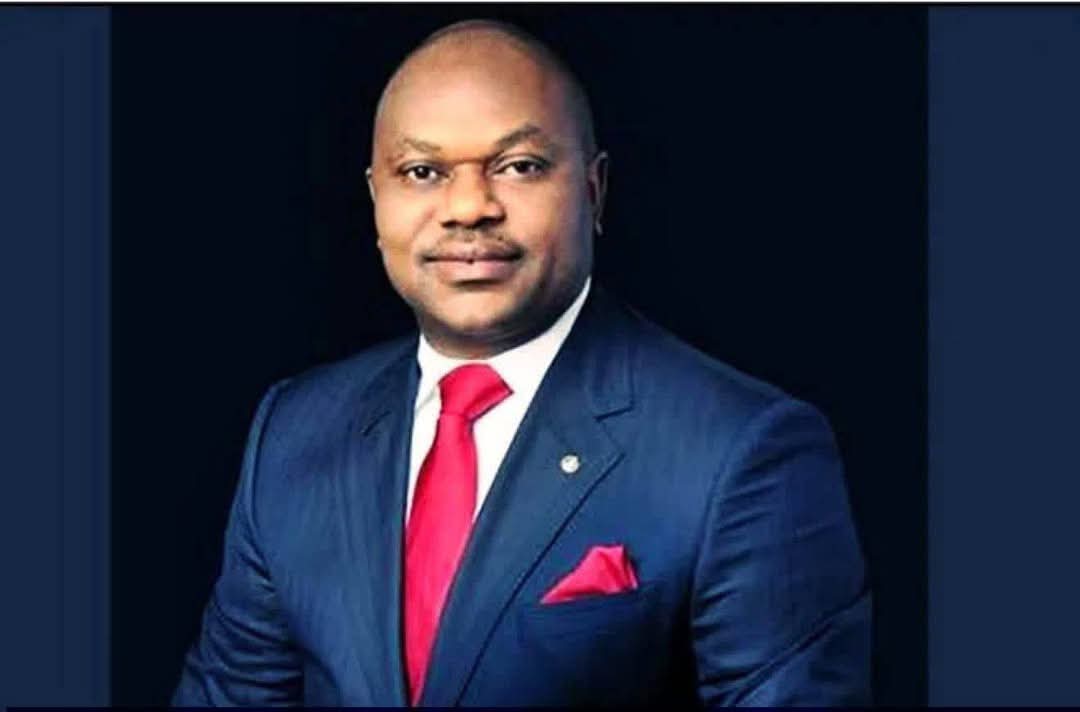
OMO-AGEGE, OCHEI AND THE NDC WAVE: ARE DELTA NORTH AND DELTA CENTRAL HEADING FOR A POLITICAL EARTHQUAKE IN 2027?

By Peter Legacy and Uche Austin- NOL24 TV Analysis (NOL24 MEDIA CATHEDRAL)
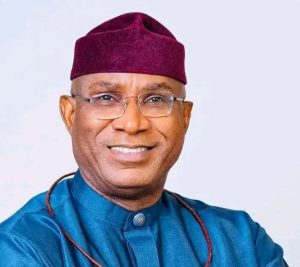
ASABA, DELTA STATE — The political landscape of Delta State appears to be entering one of its most unpredictable phases in recent history following the emergence of former Deputy Senate President, Ovie Omo-Agege, and former Speaker of the Delta State House of Assembly, Victor Ochei, as senatorial contenders under the platform of the Nigeria Democratic Congress (NDC) ahead of the 2027 general elections.
The development, which followed their dramatic exit from the APC and subsequent waivers granted by the NDC leadership, has triggered intense political calculations across Delta North, Delta Central, and the wider Delta State political structure.
One fact is increasingly difficult to ignore: the political calculations for 2027 have changed dramatically.
From Ughelli to Sapele, from Asaba to Ogwashi-Uku, conversations about the future of Delta politics are no longer centered solely on established party structures but increasingly on the influence of political personalities capable of shifting electoral equations.
Political observers say the candidacies of Omo-Agege and Ochei may not merely be senatorial contests; they could become the defining battles that reshape political alliances, voter loyalties, and party dominance in Delta State ahead of 2027.
DELTA CENTRAL: OMO-AGEGE REMAINS A FORMIDABLE FORCE
In Delta Central Senatorial District, Omo-Agege remains arguably one of the most influential political figures produced by the Urhobo nation in recent decades.
Despite his departure from the APC, analysts believe his personal political structure remains largely intact across the eight local government areas that make up the district.
Having previously served as Deputy Senate President and having built an extensive grassroots network over several election cycles, Omo-Agege enters the race with considerable name recognition and political capital.
His movement to the NDC immediately presents the party with credibility in Delta Central, a district where voter behavior has often revolved around strong personalities rather than party labels.
Political strategist Emeka Edeh explains:
“Many politicians change parties and disappear politically. Omo-Agege is different. His political brand has developed beyond party structures. The real question is whether his supporters will move with him.”
If they do, Delta Central could become one of the most fiercely contested senatorial districts in the country.
For the APC, his exit creates a significant vacuum. The party now faces the challenge of rebuilding structures and retaining supporters who have historically aligned themselves with Omo-Agege’s political machinery.
The NDC, on the other hand, suddenly finds itself possessing a competitive platform in a district where it previously had limited visibility.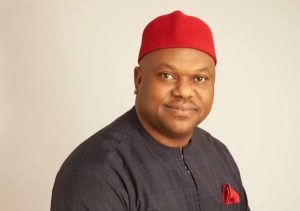
DELTA NORTH: VICTOR OCHEI’S RETURN TO THE BIG STAGE
In Delta North, the candidacy of Victor Ochei introduces another powerful dynamic.
Widely regarded as one of the most experienced political figures in Anioma politics, Ochei’s legislative background, extensive grassroots relationships, and enduring influence across several communities make him a serious contender.
Political observers note that Ochei’s strength lies in his ability to connect with diverse political blocs across the district.
His years as Speaker of the Delta State House of Assembly provided him with extensive political relationships that transcend party lines.
For many voters in Delta North, Ochei’s candidacy may represent an alternative power center capable of challenging existing political structures.
Several analysts believe his entry into the NDC could attract politicians, youth groups, and community leaders seeking a new political platform ahead of 2027.
While Delta North has historically produced highly competitive elections, Ochei’s presence is expected to significantly elevate the stakes and force rival parties to rethink their electoral strategies.
His campaign is also likely to appeal to voters who view experience and legislative competence as major considerations in choosing representation.
THE BIGGER DELTA EQUATION
Beyond the individual senatorial contests, the real significance of the Omo-Agege and Ochei factor may lie in what it means for Delta State politics as a whole.
For years, Delta politics has largely revolved around dominant political structures and established party networks.
However, the arrival of two heavyweight politicians into the NDC creates the possibility of a genuine three-way political contest involving the APC, PDP, and NDC.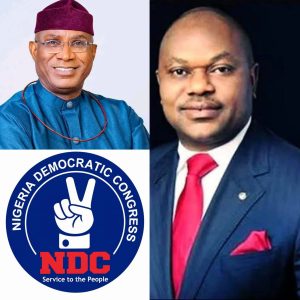
Political analysts argue that if Omo-Agege consolidates Delta Central while Ochei gains substantial traction in Delta North, the NDC could emerge as a major force capable of influencing statewide outcomes.
The party has already described both politicians as leaders with strong grassroots appeal and significant electoral value.
The implications extend beyond Senate races.
Strong senatorial performances often influence House of Representatives contests, State Assembly elections, local government races, and even gubernatorial calculations.
Should both men successfully transfer their personal popularity to the NDC platform, Delta State could witness one of its most competitive electoral cycles since the return of democratic rule.
WHAT THE POLLS COULD LOOK LIKE
While official polling remains limited this far ahead of the election, political observers suggest several emerging possibilities:
First, Omo-Agege’s candidacy could significantly split traditional APC support bases in Delta Central.
Second, Ochei’s entry could redraw existing political alliances in Delta North.
Third, the NDC may become the biggest beneficiary of political realignment if it successfully integrates both leaders into a cohesive statewide structure.
Fourth, voter turnout could increase considerably as competition intensifies across the state.
Political historian Charles Omonijo notes:
“When powerful political actors migrate simultaneously from one party to another, elections cease to be predictable. What follows is usually a complete recalibration of political loyalties.”
THE ROAD TO 2027
For now, the emergence of Omo-Agege and Ochei as NDC senatorial contenders has injected fresh uncertainty into Delta politics.
Whether their movement ultimately translates into electoral victories remains to be seen.
However, one fact is increasingly difficult to ignore: the political calculations for 2027 have changed dramatically.
From Ughelli to Sapele, from Asaba to Ogwashi-Uku, conversations about the future of Delta politics are no longer centered solely on established party structures but increasingly on the influence of political personalities capable of shifting electoral equations.
As the countdown to 2027 continues, the senatorial ambitions of Ovie Omo-Agege and Victor Ochei may well become the catalyst for one of the most consequential political realignments in Delta State’s democratic history.
For now, the question is no longer whether they can compete under the NDC platform.
The question is whether their combined political weight can redefine the balance of power across Delta North, Delta Central, and ultimately, Delta State itself.

